The Era of Writing Beautiful Texts Is Over — The Era of Designing Interventions Has Begun
For some time now, one thing has become increasingly clear: Horizon Europe Cluster 2 projects no longer accept the project-writing reflexes we are used to. Reusing the same words with slightly more decoration simply does not work anymore. Listing values, quoting policy documents, aligning the “right” keywords side by side—none of these, on their own, are convincing.
Because Cluster 2 does not fund texts. It funds mechanisms.
When we say “now it’s time,” we are not merely referring to the opening of a new call period. The real issue is this: Europe no longer wants to move forward in areas such as culture, democracy, participation, trust, identity, and social cohesion through well-intentioned narratives. It wants to advance through interventions that are proven to work. Cluster 2 exists precisely for this reason.
This is an op-ed. It is not written to comfort, but to clarify. Because unless we understand why proposals are rejected in Cluster 2, we cannot meaningfully discuss how they can be funded.
The Real Language of Cluster 2: From Values to Everyday Routines
The biggest mistake made by those encountering Cluster 2 for the first time is this assumption: “This is a values-driven area, so the text should mainly be a values narrative.”
No. Values are the starting point, not the destination.
Democracy, inclusion, equality, cultural diversity—these are already shared objectives. The evaluator is not asking, “Do you believe in these values?” The real question is: Why do these values fail to materialise in everyday life, and how exactly will you change that
Saying participation is declining is not enough. Where is it declining For whom Which institutional routine is causing this Are digital tools exclusionary Is the language inaccessible Is the process unsafe Are past experiences discouraging participation
This is where the language of Cluster 2 truly begins. Not in abstract aspirations, but in concrete points of friction.
Choosing a Topic Is Easy — Building a Problem Architecture Is Hard
Many Cluster 2 applications choose a “topic.” Very few construct a genuine problem architecture.
“Polarisation” is a topic. But the information flows that produce polarisation, platform behaviours, institutional communication styles, local norms, and emotional triggers form an architecture.
“Inclusion” is a theme. But inaccessible procedures, invisible barriers, and routines that systematically exclude target groups constitute an architecture.
Winning projects do not describe the theme; they intervene in the architecture.
Here is an uncomfortable truth: in Cluster 2, breadth is weakness, focus is strength. A “let’s touch everything” approach signals one thing to evaluators: we cannot truly solve anything.
Projects aiming for the 95+ range select a manageable slice and work on it in depth. Because Horizon does not purchase intention—it purchases implementation capacity.
Needs Analysis: Not “There Is a Problem,” but “The Gap Is Here”
Writing a needs analysis is not about saying “this topic is important.” A needs analysis is about showing why the current system does not work.
Is there policy but no implementation Implementation but no capacity Capacity but no incentives Incentives but no trust
Cluster 2 projects are driven precisely by this question: why is it not working
Participation mechanisms, for example, are often democratic on paper. But in practice, they are inaccessible. Meetings are organised, yet target groups do not attend. The venue is unsuitable, the timing is wrong, the language is inaccessible, the process feels unsafe. A perception has settled in: “Nothing will change anyway.”
This is where the project begins. Not by adding another event, but by changing how institutions design participation.
SSH Integration: Not a Supporting Role, but the Core Engine
The heart of Cluster 2 lies in Social Sciences and Humanities (SSH). But this does not mean simply adding SSH as a partner label.
SSH integration means:
- Defining the problem through behavioural, normative, and institutional analysis
- Grounding the theory of change in social dynamics
- Measuring not only outputs, but behavioural and routine change
- Designing uptake together with power relations and incentive structures
Designing participation without understanding behaviour, expecting inclusion without recognising norms, claiming sustainability without analysing internal incentives—each of these weakens a proposal.
Evaluators detect this very quickly.
Excellence: Not Jargon, but Design Quality
In Horizon Europe, excellence does not mean “sounding academic.” Excellence means being able to clearly answer the questions: why this method, in this context, for this target group
Cluster 2 projects often combine research and implementation. Balance is critical. Research should not be conducted merely to produce reports, but to shape the intervention. Pilots should not exist for visibility, but to test what actually works. Measurement should serve both scientific credibility and institutional decision-making.
When this loop is missing, projects appear either “academic but detached” or “social but unsubstantiated.” Both are risky.
Impact: Not Visibility, but Uptake
This is where Cluster 2 projects lose the most points.
Impact is not a website. Impact is not a conference. Impact is not a social media campaign.
Impact means institutions start doing something differently.
If a procedure changes, there is impact. If a training module becomes an internal standard, there is impact. If a participation protocol is permanently revised, there is impact.
Evaluators ask a simple question: “What remains beyond the project once the funding ends?”
If the answer is “reports,” risk begins. If the answer is “routines in use,” scores rise.
European Added Value: Not a Slogan, but a Necessary Scale
Saying “European cooperation is important” is not enough in Cluster 2. The real question is: Why did this project need to be implemented at European rather than national level
Does the problem manifest differently across countries Can the solution be validated without comparative testing Do different governance contexts strengthen the intervention
If the answer is yes, European added value is real. If not, why Horizon
Transferability is not a claim; it is a design task. Without shared criteria, adaptation guidelines, and quality frameworks, transfer remains rhetorical.
Implementation: Not a Management Section, but a Trust Test
The implementation section is not about saying “we will hold meetings.” It requires clarity on decision-making, quality gates, risk escalation, and ownership.
The phrase “all partners will contribute” is an alarm bell for evaluators. In projects targeting 95+ scores, every key output has one clearly identified owner. This increases both manageability and credibility.
Ethics, Data, and Trust
Cluster 2 projects operate in sensitive fields: identities, participation, digital behaviour, community relations. Ethics therefore is not a formality—it is trust by design.
A single GDPR sentence is insufficient. Consent, harm mitigation, safe participation, data minimisation, and access control must be embedded in the design. Otherwise, the project becomes fragile under ultra-strict evaluation.
What Does “Now It’s Time” Really Mean
Saying “now it’s time” means accepting this: We are no longer writing projects—we are designing interventions.
We are not choosing themes; we are building problem architectures. We are not chasing visibility; we are designing uptake. We are not proving European added value with slogans, but with necessary scale.
Cluster 2 is not looking for “good people.” It is looking for well-designed projects that can credibly be shown to work.
If it is truly time to prepare Horizon Europe Cluster 2 projects, then we must come to the table not with elegant texts, but with functioning designs.
And perhaps the clearest sentence of all is this: Winning in Cluster 2 is not about submitting an application; it is about convincingly demonstrating a mechanism of change.
______________________________________________________________________________
If you'd like to meet Ali Ulusoy, who has been working on building ecosystems and sustainable project structures for many years, you can send him a message via LinkedIn or contact him directly via email. 👉 Connect, let's talk.
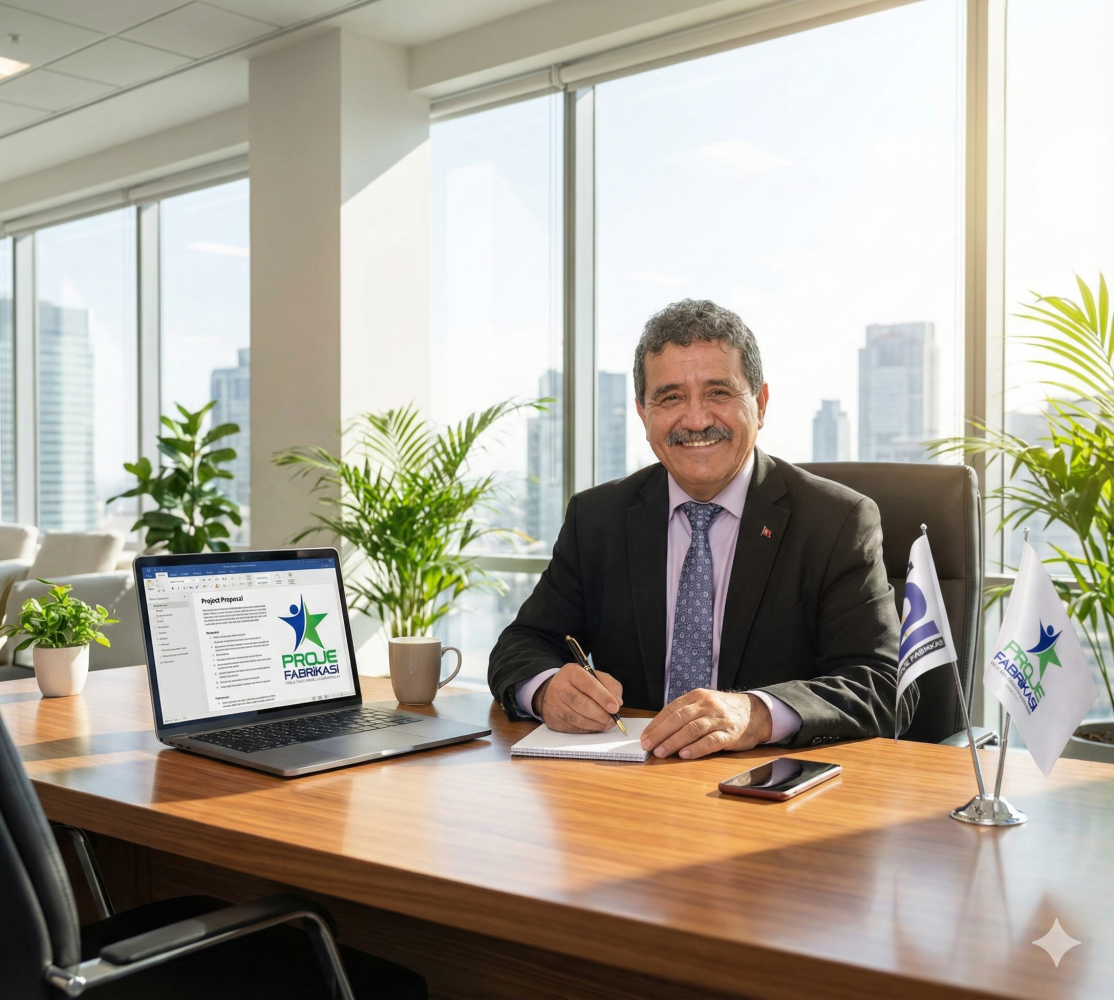
- -We can add value to your projects with our organizations in Türkiye and Estonia. Would you like to benefit from our contribution in writing your Horizon Europea projects
- Ali ULUSOY
- Proje Fabrikası Kurucusu / President of Project Factory
- Engelsiz ve Mutlu Yaşam Derneği Başkanı / President of Barrier Free and Happy Life Association
- happykidstr@gmail.com https://projehaberleri.com/
- Stay Connected WhatsApp: +90 530 363 3120
- Facebook: mahalleninalisi Twitter / X: Happykidsturke2 LinkedIn: happykidsturkey