
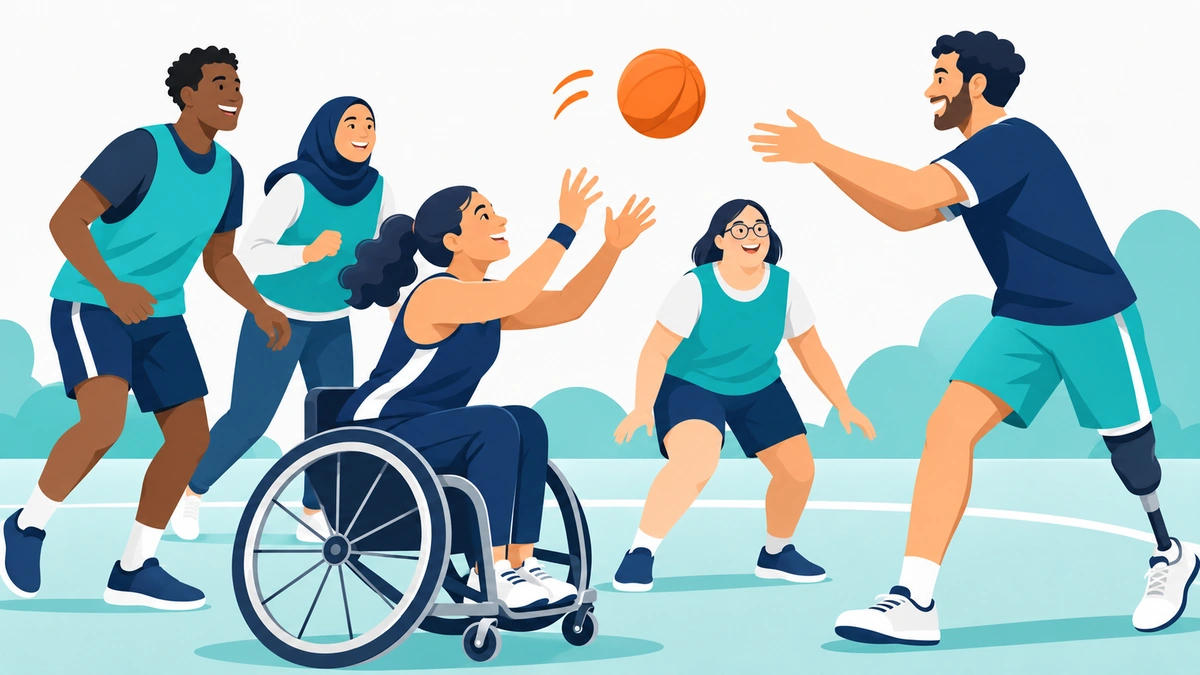
 Thematic Portfolio Illustration
SPORT IMPACT HUB — Measuring What Works in European Grassroots Sport
SPORT IMPACT HUB addresses fragmented outcome measurement across grassroots sport by standardising a lightweight European outcome taxonomy, indicator dictionary and evidence-to-action toolkit for clubs and project managers. Tested through multi-country grassroots pilots, this pre-consortium concept seeks an eligible Applicant / Coordinator for the 2027 EACEA Sport call.
1. Need, Context and Problem Statement
Across Europe, grassroots sport clubs, sport-for-development NGOs and community physical-activity initiatives are increasingly expected by municipalities, federations and public funders to demonstrate measurable health, inclusion and social outcomes rather than simple attendance headcounts. While WHO Europe’s 2024 EU HEPA monitoring framework (tracking 23 policy indicators) and 2025 Health-Promoting Sports Clubs evaluation guidance show the value of standardised surveillance and club-level observation, grassroots sport impact measurement remains highly fragmented. Small and volunteer-led organisations face inconsistent indicator definitions, missing baselines, heavy academic questionnaires and weak evidence-to-action routines, leaving collected data unused for programme improvement or scaling.
2. Project Aim, Specific Objectives and Intervention Logic
Anchored to a single substantive 2027 Erasmus+ Sport priority (such as health-enhancing physical activity or sport organisational capacity, to be confirmed upon publication of the 2027 Programme Guide), SPORT IMPACT HUB aims to co-design, pilot and validate a Minimum Grassroots Sport Impact Framework proportionate for small and volunteer-run organisations. Specific objectives are to: (1) validate end-user demand and current measurement baselines among grassroots clubs, project managers, evaluators, networks and funders; (2) co-design a common outcome taxonomy, minimum indicator dictionary and lightweight mixed-method measurement toolkit; (3) build practical evaluation and digital data-quality literacy among sport practitioners; (4) test full measurement-to-decision cycles in multi-country grassroots pilots; and (5) embed adoption across sport networks and funding bodies.
3. Core Activities, Methodology and Work Packages
Organised across five sequential work packages with strict scope-control gates, WP1 establishes project governance, data-protection compliance and quality assurance, delivering an Impact Governance and Data Framework. WP2 conducts an Impact Needs and Practice Diagnostic across partner countries, consulting grassroots clubs, sport project managers, researchers and network/funder stakeholders before freezing indicator scope. WP3 develops the Minimum Grassroots Sport Impact Framework—featuring a bounded outcome taxonomy and indicator dictionary—paired with a practical Measurement and Decision Toolkit and practitioner training modules. WP4 implements multi-country pilot measurement cycles inside real grassroots sport programmes, evaluating tool usability, data completeness and evidence-based operational adjustments. WP5 compiles an Impact Pilot Casebook and delivers a modular Adoption and Replication Package.
4. Expected Results, Concrete Outputs and Target-Group Impact
Planned flagship deliverables comprise the Impact Governance and Data Framework, Impact Needs and Practice Diagnostic, Minimum Grassroots Sport Impact Framework (outcome taxonomy and minimum indicator dictionary), Measurement and Decision Toolkit, Impact Pilot Casebook and European Adoption and Replication Package. Grassroots sport clubs and project managers gain lightweight, GDPR-compliant tools to define realistic baselines, measure retention and wellbeing/inclusion change without overburdening volunteers, and translate findings into better session design. Sport networks, municipalities and funders gain more consistent, comparable outcome evidence without attributing macro health-system savings to individual local projects. Numeric pilot targets remain pre-consortium parameters to be locked after WP2 validation.
5. Institutional Adoption, Transferability and Sustainability
To ensure enduring use after grant completion, SPORT IMPACT HUB focuses on embedding minimum indicator sets and learning-review routines into routine club monitoring, umbrella-network reporting templates and municipal or federation grant-support schemes. Keeping data collection proportionate, low-cost and tool-neutral enables small volunteer clubs to maintain baseline-to-endline tracking across annual seasons without external evaluators. Distinguishing core European outcome definitions from programme-specific thematic modules allows sport-for-all networks, universities and national federations to adapt the framework across health, inclusion and youth-sport initiatives.
6. Sought Applicant / Coordinator Profile and Consortium Structure
Currently in the pre-consortium portfolio, SPORT IMPACT HUB actively seeks an eligible Applicant / Coordinator—such as a university research centre in sport sciences, HEPA and evaluation, a European sport umbrella network, or a national sport-for-all confederation with strong monitoring and club-support remit—to lead the centralised 2027 EACEA Cooperation Partnerships in Sport proposal. The indicative consortium architecture brings together a university sport-evaluation lead, a European or national sport network/federation, grassroots pilot sport organisations and digital measurement/dissemination expertise, with one substantive 2027 call priority, partner commitments and lump-sum budget details to be finalised before submission.
Sought Applicant / Coordinator Organisation Profile
Seeking Applicant / CoordinatorSought Organisation Type
University faculty or research centre in sport sciences, physical-activity surveillance and impact evaluation, European sport umbrella network, or national sport-for-all confederation/federation.
Expected Thematic Expertise
Strong methodological expertise in grassroots sport outcome evaluation, HEPA/wellbeing indicator design, lightweight mixed-method data governance, grassroots club pilot testing, and centralised EACEA project coordination.
Expected Role in Coordination & Proposal Preparation
Anchor the concept to one verified 2027 Erasmus+ Sport priority, lead consortium formation and Part B submission to EACEA via the EU Funding & Tenders Portal, direct WP1 governance and data-quality controls, and champion European network adoption.
Official Country & Institutional Eligibility
Any public or private legal entity active in the field of sport and physical activity, legally established in an EU Member State or third country associated to the Erasmus+ Programme, holding a valid PIC on the EU Funding & Tenders Portal, subject to verification against the official 2027 Erasmus+ Programme Guide and EACEA call conditions.
How to express interest: Eligible organisations matching the profile above can submit the form below; the project code and title are automatically attached to your expression of interest.