
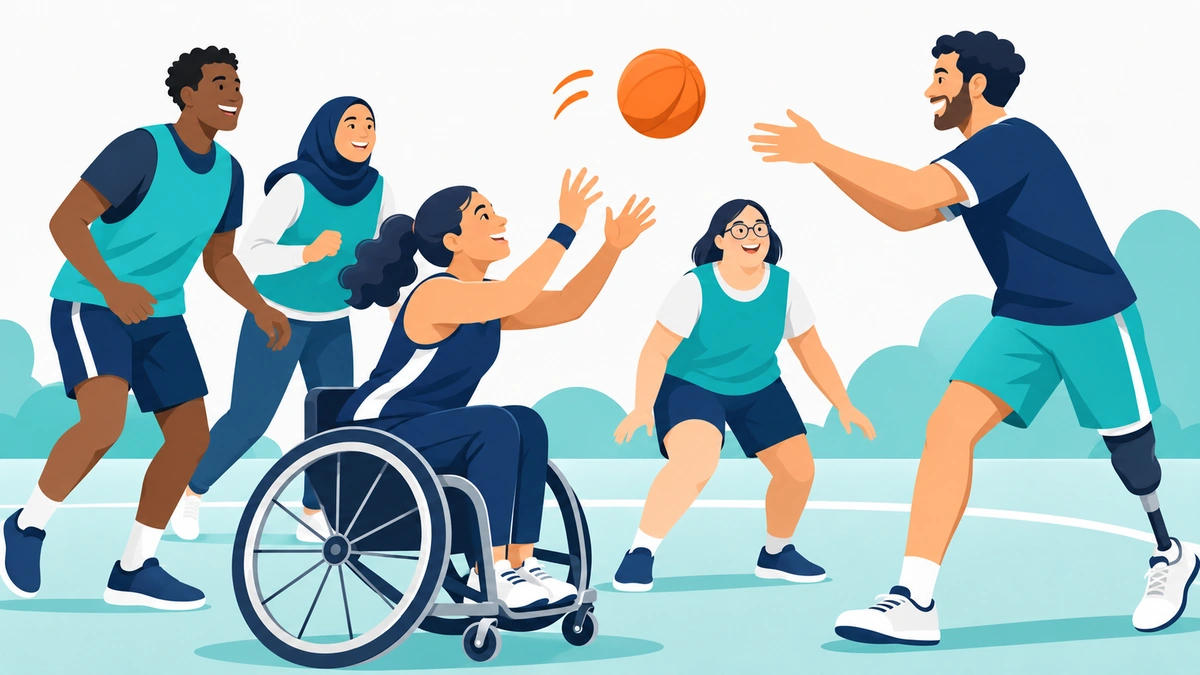
 Thematic Portfolio Illustration
DUAL CAREER SPORT — Learning Pathways and Dual-Career Support for Athletes
DUAL CAREER SPORT helps student-athletes and working athletes reconcile sport, education and employment through coordinated dual-career support. Combining athlete learner-journey mapping, institutional flexibility agreements, wellbeing-aware mentoring and transition planning over 24 months, this pre-consortium concept seeks an eligible Applicant / Coordinator for the 2027 EACEA Sport call.
1. Need, Context and Problem Statement
Student-athletes and working athletes across Europe frequently struggle to reconcile intensive training and competition schedules with academic study or employment, often facing premature dropout from either sport or education. Although the EU Guidelines on Dual Careers of Athletes advocate arrangements that prevent athletes from having to choose between sporting ambition and future employability, institutional flexibility, career mentoring and post-career transition support remain highly uneven across federations, clubs, universities and employers. Recent scoping evidence covering over 3,000 student-athletes highlights persistent time, mobility, financial and coordination barriers, while systematic reviews of 56 dual-career studies underscore psychological and mental-wellbeing pressures requiring coordinated institutional support rather than isolated skills workshops.
2. Project Aim, Specific Objectives and Intervention Logic
DUAL CAREER SPORT aims to develop, pilot and validate an operational European dual-career support pathway over an indicative 24-month period (provisional EUR 250,000 lump-sum architecture), keeping institutional flexibility and coordinated support environments at the core while using transferable-skills recognition strictly where it strengthens career progression. Specific objectives are to: (1) validate five partner baselines and direct voice from student-athletes, working athletes, coaches, education providers, federations and employers; (2) co-design a common athlete-journey diagnostic, mentoring/referral protocol and flexible learning/transition toolkit; (3) prepare dual-career advisers, coaches and institutional staff across pilot settings; (4) test the pathway in five operational sport and education pilots; and (5) secure formal inter-institutional adoption agreements and European replication.
3. Core Activities, Methodology and Work Packages
Implemented through five work packages across a five-organisation consortium, WP1 manages project governance, quality assurance, financial control, ethics and data protection. WP2 acts as an evidence gate, establishing five verified organisational baselines and consulting stakeholders (indicative design target: at least 120 consulted stakeholders) before freezing pilot KPIs. WP3 develops the Athlete Learner-Journey and Institutional-Readiness Diagnostic, a Dual-Career Mentoring and Wellbeing-Aware Referral Protocol, flexible digital/blended learning and transition-planning tools, and bounded transferable-skills documentation. WP4 trains advisers and runs five real-world pilots (indicative planning target: at least 150 direct participants/testers and 120 valid completers) with baseline-to-endline evaluation. WP5 drives European dissemination, policy/network dialogue and structured transfer.
4. Expected Results, Concrete Outputs and Target-Group Impact
Concrete planned outputs comprise the European Dual-Career Support Pathway and Institutional Readiness Model, Athlete Learner-Journey Mapping Tools, a Mentoring, Wellbeing and Referral Protocol, Transition and Transferable-Skills Planning Resources, five pilot validation reports and an Institutional Adoption Guide. Indicative planning targets—subject to WP2 baseline confirmation—include at least four formal institutional adoption or sport–education cooperation agreements and structured replication across at least 10 additional organisations. Athletes gain realistic study/work flexibility, clearer visibility of transferable competences and structured career-transition plans, while federations, universities and clubs build durable coordination bridges.
5. Institutional Adoption, Transferability and Sustainability
Long-term continuation is built around formal dual-career cooperation protocols linking sport federations or clubs with universities, vocational providers and career-support services, ensuring support structures outlive individual athlete cohorts. By embedding flexible scheduling guidelines, named dual-career contact points and transition check-ins into existing academic and federation athlete-welfare procedures, partner institutions avoid ongoing grant dependency. Separating core dual-career coordination standards from national higher-education and sport governance rules enables broad uptake across diverse European Olympic, federation and university contexts.
6. Sought Applicant / Coordinator Profile and Consortium Structure
Currently in pre-consortium validation, DUAL CAREER SPORT actively seeks an eligible Applicant / Coordinator—such as a National Olympic Committee, national multi-sport confederation, major sport federation with athlete-welfare mandate, or university with an established dual-career sport centre—to lead the centralised 2027 EACEA Cooperation Partnerships in Sport application. The planned five-partner architecture combines a sport-system dual-career owner, two piloting sport federations or athlete-pathway organisations, a university athlete-wellbeing and evaluation partner, and a sport-pedagogy/learning-design university centre, with all mandates and 2027 call alignment to be verified prior to submission.
Sought Applicant / Coordinator Organisation Profile
Seeking Applicant / CoordinatorSought Organisation Type
National Olympic Committee or multi-sport confederation, national sport federation with athlete-pathway and welfare remit, athlete dual-career support body, or university with an institutional dual-career sport programme.
Expected Thematic Expertise
Established mandate in athlete career support, sport–education coordination, mentoring and athlete wellbeing safeguards, direct access to student/working athlete cohorts for piloting, and governance capacity to lead a centralised EACEA partnership.
Expected Role in Coordination & Proposal Preparation
Lead consortium confirmation and Part B proposal submission to EACEA via the EU Funding & Tenders Portal, direct WP1 governance, quality and ethics oversight, anchor institutional sport–education dual-career agreements, and drive European system-level transfer.
Official Country & Institutional Eligibility
Any public or private legal entity active in the field of sport and physical activity, legally established in an EU Member State or third country associated to the Erasmus+ Programme, holding a valid PIC on the EU Funding & Tenders Portal, subject to verification against the official 2027 Erasmus+ Programme Guide and EACEA call conditions.
How to express interest: Eligible organisations matching the profile above can submit the form below; the project code and title are automatically attached to your expression of interest.