
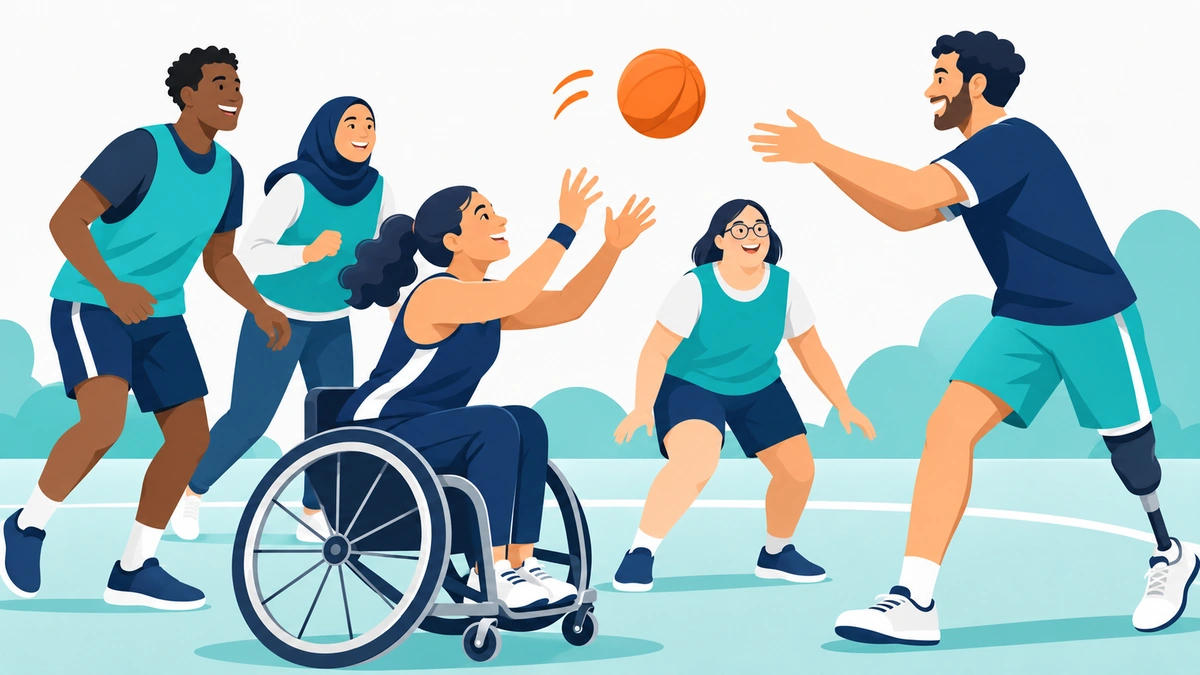
 Thematic Portfolio Illustration
ACTIVE CITIES EUROPE — Local Sport Ecosystems for Healthy Communities
ACTIVE CITIES EUROPE aligns municipalities, grassroots clubs and community health actors into coordinated local sport ecosystems reaching inactive residents. Combining municipal ecosystem diagnostics, shared referral pathways and five city pilots over 24 months, this pre-consortium concept actively seeks an eligible Applicant / Coordinator for the 2027 EACEA Sport call.
1. Need, Context and Problem Statement
In many European towns and cities, municipal sport departments, grassroots sport clubs, neighbourhood organisations and primary health or community services operate in parallel silos rather than as coordinated local ecosystems capable of engaging inactive citizens. While initiatives such as the European Week of Sport and the European Sport Model demonstrate the reach of distributed community activation, one-off municipal sport festivals rarely convert inactive residents into sustained weekly participants unless backed by shared local inactivity data, clear referral routes into welcoming low-threshold club offers and formal municipal coordination mechanisms.
2. Project Aim, Specific Objectives and Intervention Logic
ACTIVE CITIES EUROPE aims to establish, pilot and validate a municipality-led Active City Sport Ecosystem Model over an indicative 24-month period (provisional EUR 250,000 lump-sum design), positioning local public authorities and sport associations as active owners of participation mapping, multi-actor coordination and repeat-participation pathways rather than generic living labs. Specific objectives are to: (1) establish five verified city/locality baselines and consult inactive citizens, clubs, municipal staff and community/health actors; (2) co-design the Active City Model, ecosystem diagnostic and five local action plans; (3) ensure 100% of pilot localities meet operational readiness criteria; (4) run five city/locality pilots tracking coordinated referral practice and repeat participation; and (5) secure formal municipal continuation decisions and European transfer.
3. Core Activities, Methodology and Work Packages
Organised across five work packages for a five-partner consortium, WP1 oversees governance, quality assurance, financial control and keeping management costs proportionate (below 20%). WP2 operates as a mandatory evidence gate, producing five locality baselines and direct consultations with inactive groups and local actors (indicative target: at least 150 consulted stakeholders) before locking pilot KPIs. WP3 develops the Local Sport Ecosystem Diagnostic, municipality–club–community governance and referral protocols, low-threshold activation formats and five tailored City Action Plans. WP4 verifies site readiness and implements five city/locality pilots (indicative planning target: at least 300 direct participants, community users and delivery staff) measuring coordinated referrals and sustained participation. WP5 delivers comparative policy/practice guidance and drives European municipal replication.
4. Expected Results, Concrete Outputs and Target-Group Impact
Planned flagship outputs include the Active City Sport Ecosystem Model and Implementation Toolkit, a Local Ecosystem and Participation Diagnostic, five validated Municipal–Club Shared Action Plans, comparative five-city pilot evaluation reports and a European Active Cities Replication Guide. Indicative pre-consortium planning targets—subject to WP2 baseline calibration—envisage five documented institutional adoption or municipal continuation decisions and structured transfer to at least 10 external municipalities or regional sport bodies. Inactive residents gain supported, low-barrier routes into local clubs, while municipalities and grassroots clubs replace fragmented campaigns with shared evidence and referral workflows.
5. Institutional Adoption, Transferability and Sustainability
Durability is built into municipal ownership from the outset: each participating city or public sport body designates an adoption owner to embed the ecosystem coordination table, community referral bridge and shared participation indicators into multi-annual local sport and healthy-lifestyle plans. Because the model coordinates existing municipal spaces, community outreach channels and local sport clubs rather than creating parallel project-only services, cities can maintain operations within standard public sport budgets. Separating core municipal governance mechanics from national administrative competencies supports smooth transfer across European cities and regional sport confederations.
6. Sought Applicant / Coordinator Profile and Consortium Structure
Currently in pre-consortium validation, ACTIVE CITIES EUROPE actively seeks an eligible Applicant / Coordinator—ideally a municipality, provincial or regional public youth-and-sport authority, city sport association, or regional sport confederation with direct municipal-ecosystem mandate—to lead the centralised 2027 EACEA Cooperation Partnerships in Sport proposal. The planned five-organisation consortium combines a public sport authority or municipal lead, a regional club-confederation system partner, a community sport-delivery specialist, a municipal sport-union pilot partner and a grassroots community club reaching inactive groups, with all commitments and 2027 call rules verified before submission.
Sought Applicant / Coordinator Organisation Profile
Seeking Applicant / CoordinatorSought Organisation Type
Municipality or city sport department, provincial/regional public sport and youth authority, municipal sport association/union, or regional sport confederation coordinating local club ecosystems.
Expected Thematic Expertise
Institutional authority in local sport policy, public facility and club-network coordination, outreach to physically inactive urban/community populations, and administrative capacity to lead a centralised EACEA Cooperation Partnership.
Expected Role in Coordination & Proposal Preparation
Lead consortium lock and Part B submission to EACEA via the EU Funding & Tenders Portal, direct WP1 governance, quality and financial controls, host a flagship municipal sport-ecosystem pilot, and anchor adoption across European active-city networks.
Official Country & Institutional Eligibility
Any public or private legal entity active in the field of sport and physical activity, legally established in an EU Member State or third country associated to the Erasmus+ Programme, holding a valid PIC on the EU Funding & Tenders Portal, subject to verification against the official 2027 Erasmus+ Programme Guide and EACEA call conditions.
How to express interest: Eligible organisations matching the profile above can submit the form below; the project code and title are automatically attached to your expression of interest.