
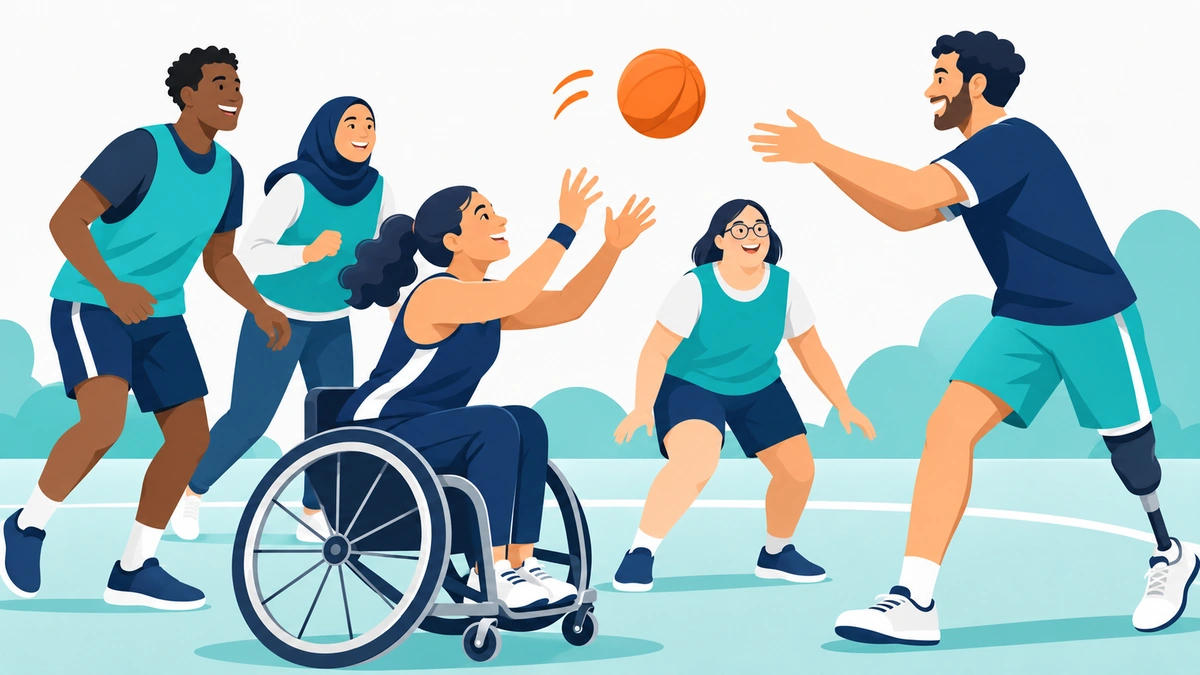
 Thematic Portfolio Illustration
SAFE CLUB EUROPE — Grassroots Safe Sport Club Standard
SAFE CLUB EUROPE establishes an auditable minimum Safe Sport Club Standard for grassroots clubs lacking clear safeguarding, disclosure and referral procedures. Combining an eight-domain standard, scenario-based staff training and eight club pilots over 24 months, this pre-consortium concept seeks an eligible Applicant / Coordinator for the 2027 EACEA Sport call.
1. Need, Context and Problem Statement
Across amateur and youth sport in Europe, many grassroots clubs still operate without written safeguarding procedures, clear role boundaries, safe disclosure channels or lawful external referral pathways. While European Commission sport-integrity policy and Council of Europe initiatives such as Start to Talk emphasise concrete organisational prevention and response systems to protect young and vulnerable athletes, All In Plus analytical data show that only 39% of surveyed sport organisations had written gender-based-violence policies in place. Awareness campaigns alone do not equip volunteer-run clubs with an operational governance framework, nor can clubs safely improvise responses without clear boundaries separating club prevention duties from statutory child-protection or disciplinary authorities.
2. Project Aim, Specific Objectives and Intervention Logic
SAFE CLUB EUROPE aims to co-design, pilot and validate an auditable minimum Safe Sport Club Standard over an indicative 24-month timeframe (provisional EUR 250,000 lump-sum architecture), turning high-level safe-sport policy into a practical club-level operating system without investigating individual cases or replacing statutory authorities. Specific objectives are to: (1) establish five verified national/organisational context profiles and consult young athletes, coaches, managers and volunteers; (2) develop an eight-domain Safe Sport Club Standard, club self-assessment, Reporting and Referral Pathway and scenario-based training toolkit; (3) prepare coaches, club managers and volunteers for safe implementation; (4) test and audit the standard across eight grassroots pilot clubs; and (5) secure formal federation or umbrella-network adoption routes.
3. Core Activities, Methodology and Work Packages
Structured across five work packages for a five-organisation consortium, WP1 governs coordination, quality assurance, data protection, case-safety ethics and financial management. WP2 validates five organisational/national safeguarding baselines and conducts accessible stakeholder consultations (indicative target: at least 100 stakeholders, including young athletes and para-sport perspectives) before freezing standard thresholds. WP3 develops the eight-domain Safe Sport Club Standard—covering governance responsibility, child/participant safeguarding, safe disclosure, external referral/escalation, anti-retaliation, staff/volunteer role clarity, accessible participation and continuous improvement—alongside a club self-assessment and 12 scenario-based learning modules. WP4 prepares staff (indicative target: at least 60 coaches/managers/volunteers) and runs baseline/endline audits across eight pilot clubs (indicative target: at least 160 direct participants and eight club action plans). WP5 drives federation endorsement and European replication.
4. Expected Results, Concrete Outputs and Target-Group Impact
Planned concrete outputs include the eight-domain Grassroots Safe Sport Club Standard, a Club Safeguarding Self-Assessment Tool, a Lawful Reporting and Referral Pathway Template, a 12-scenario Staff and Volunteer Learning Pack, eight validated club action plans and a System-Owner Adoption Guide. Indicative pre-consortium planning targets—subject to WP2 baseline confirmation—envisage at least 75% minimum-standard application or corrective action across pilot clubs, at least two formal federation or umbrella-network adoption routes and documented replication interest across at least 12 external clubs. Young athletes, para-athletes, coaches and club volunteers benefit from clearer boundaries, trusted disclosure routes and accountable club governance.
5. Institutional Adoption, Transferability and Sustainability
Long-term sustainability relies on embedding the eight minimum requirements into federation club-licensing, affiliation or quality-mark schemes and routine volunteer onboarding rather than stand-alone project workshops. Because the Reporting and Referral Pathway explicitly maps where club responsibility ends and statutory child-protection, specialist GBV or federation disciplinary bodies take over, the standard adapts lawfully across diverse national legal jurisdictions. Inclusive design input ensures safeguarding tools remain accessible across mainstream, combat-sport and para-sport club environments long after grant completion.
6. Sought Applicant / Coordinator Profile and Consortium Structure
Currently at the pre-consortium validation stage, SAFE CLUB EUROPE actively seeks an eligible Applicant / Coordinator—such as a National Olympic Committee, national multi-sport confederation, Paralympic committee, or major national sport federation with formal safe-sport governance authority—to lead the centralised 2027 EACEA Cooperation Partnerships in Sport proposal. The planned five-partner architecture combines a sport-system safe-sport owner, a piloting national sport federation, an inclusive/para-sport safeguarding partner, a specialist safeguarding and gender-based-violence technical organisation, and a quality, accessible-learning and dissemination partner, with all mandates verified prior to submission.
Sought Applicant / Coordinator Organisation Profile
Seeking Applicant / CoordinatorSought Organisation Type
National Olympic Committee or multi-sport confederation, Paralympic committee, national sport federation with formal safe-sport and club-governance mandate, or European sport-integrity umbrella organisation.
Expected Thematic Expertise
Institutional authority in safe-sport governance and club standards, safeguarding and child-protection compliance, access to affiliated grassroots clubs for audited piloting, and proven capacity to coordinate a centralised EACEA partnership.
Expected Role in Coordination & Proposal Preparation
Lead consortium lock and centralised Part B submission to EACEA via the EU Funding & Tenders Portal, direct WP1 governance, ethics, safeguarding and financial controls, and anchor formal federation/system-level adoption of the Safe Sport Club Standard.
Official Country & Institutional Eligibility
Any public or private legal entity active in the field of sport and physical activity, legally established in an EU Member State or third country associated to the Erasmus+ Programme, holding a valid PIC on the EU Funding & Tenders Portal, subject to verification against the official 2027 Erasmus+ Programme Guide and EACEA call conditions.
How to express interest: Eligible organisations matching the profile above can submit the form below; the project code and title are automatically attached to your expression of interest.